
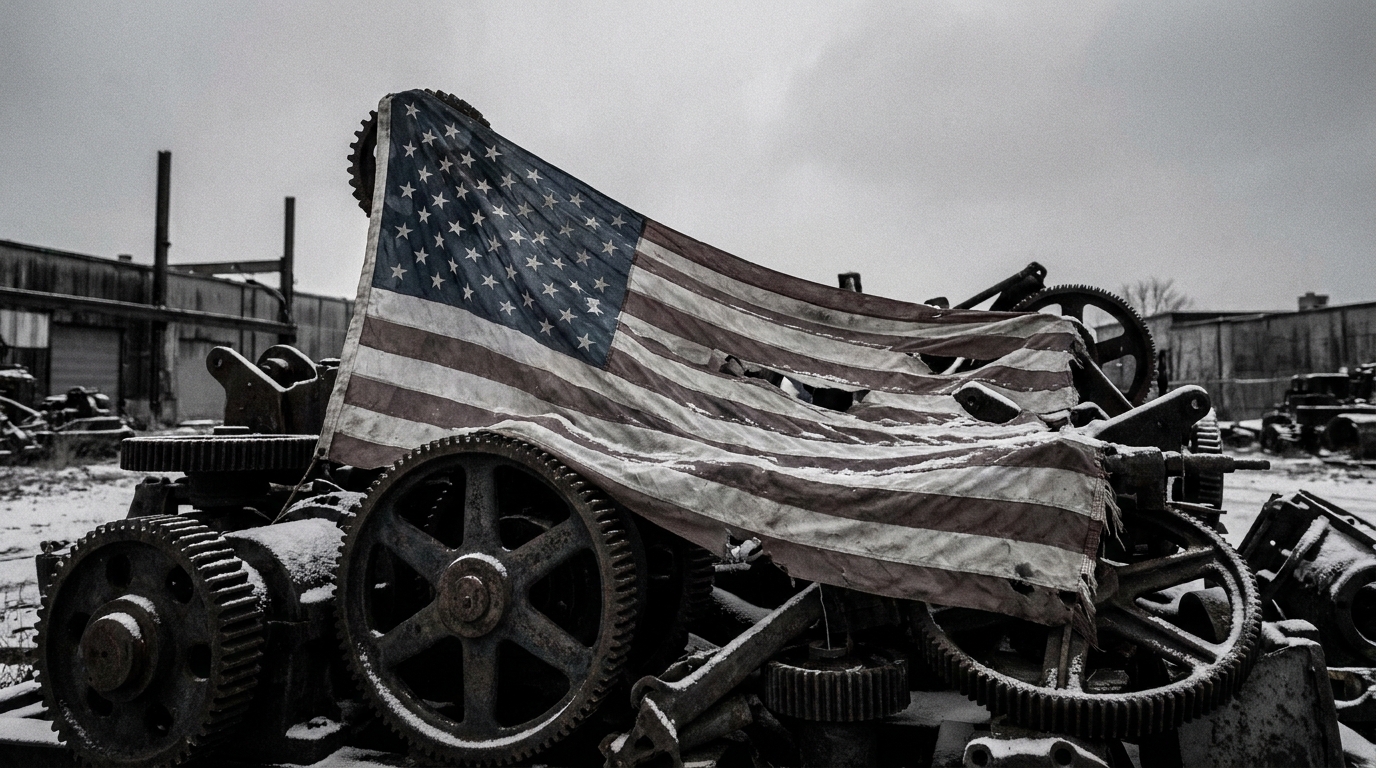
The 'Buy American' movement is often associated with conservative politics, but is the connection real? This article investigates whether American-made brands actually donate more to Republican causes, or if the link is more myth than data. We explore the political donation records of prominent domestic manufacturers, examine tariff and trade policy intersections, and help readers understand how country of origin and corporate political leanings are two separate - though sometimes overlapping - decisions when shopping with values at the forefront.
Few phrases carry more patriotic weight in American consumer culture than "Made in USA." Slap
those three words on a label and you've immediately triggered a specific set of associations -
pride, quality, economic loyalty, and for many consumers, a vague but powerful sense of political
alignment with conservative, America-first values. But here's where it gets genuinely interesting:
does the "Made in USA" label actually correlate with conservative political donations at the
corporate level? The data says: sometimes - but far less reliably than the bumper sticker suggests.
The OpenSecrets database, which tracks campaign finance records across all manufacturing sub-sectors,
reveals that American domestic manufacturing is more politically diverse than its "conservative"
cultural reputation implies. Yes, heavy industrial manufacturers - steel, coal, traditional auto
assembly - have historically skewed Republican. But American-made apparel brands, organic food
producers, craft beverage makers, and technology manufacturers often have very different political
profiles, sometimes strongly progressive ones. The factory floor does not determine the donor list.
According to Timothy Werner's research at the University of Texas McCombs School of Business on
political ideology in corporate America, the strongest predictor of a company's partisan donation
lean is not its manufacturing location but rather its industry sector, regulatory environment, and
the political composition of its customer base. A domestic manufacturer that primarily sells to
progressive urban consumers has powerful financial incentives to reflect progressive political
values - regardless of where its products are actually made.
Some illustrative contrasts drawn directly from FEC records:
Caterpillar (iconic American-made heavy equipment) - consistently Republican-leaning PAC
contributions, aligned with its core conservative industrial customer base
Patagonia (significant domestic manufacturing presence) - strongly and explicitly progressive
corporate political stance; its founder transferred company ownership to an environmental nonprofit
New Balance (one of very few sneaker brands with meaningful U.S. production) - has historically
maintained conservative-leaning executive donations, aligning with its heritage positioning
American-made craft distilleries - political profiles are almost entirely local and bipartisan,
reflecting the independent, founder-owned nature of the craft spirits industry
The "Made in USA" label tells you where a product was made. It tells you nothing - zero - about
whose political campaigns the company funds with the profits from selling it.
Here's the nuanced consumer reality that doesn't fit neatly on a bumper sticker: "Buy American"
and "Buy Aligned" are two separate shopping decisions that only occasionally overlap. Being
deliberate about both requires two distinct research steps - and conflating them leads to
assumptions that the FEC data simply doesn't support.
The practical challenge is that "Made in USA" verification is already complex enough on its own.
The FTC's "Made in USA" standard requires that "all or virtually all" of a product be made
domestically - a phrase that leaves significant interpretive wiggle room for clever legal teams.
Add the layer of corporate political donation research on top, and you have a two-variable
evaluation that most consumers have neither the time nor the tools to perform at the point of
purchase. Until now.
This is precisely where purpose-built consumer tools change the game. FEC.gov is comprehensive
but requires you to know what you're looking for. OpenSecrets adds interpretive context but
presumes some campaign finance literacy. ShopHowYouVote.com synthesizes both into a fast,
searchable brand profile any consumer can access in 15 seconds while standing in any aisle of
any store in America.
Practical guidance for consumers who care about both domestic production AND political alignment:
Don't assume - verify. A "Made in USA" label is not a political alignment indicator; always
check the brand's FEC profile separately from its origin label
Look for companies where domestic manufacturing commitment AND political values genuinely
align - they exist, but require deliberate research to find
Supporting real domestic manufacturers (even politically misaligned ones) does support
American workers and the broader domestic economy; sometimes the trade-off is consciously
worth it
When two aligned options exist - one domestic, one imported - the domestic choice compounds
the political and economic value of your purchase in a genuinely meaningful way
Craft categories (food and beverage, artisanal goods, independently-owned manufacturers)
are where you're most likely to find domestic production AND verifiable political transparency
in a single product
Shop American when you can. Shop aligned always. Use the data to know the difference.
1. OpenSecrets - 'Manufacturing Sector Political Contribution Data,' Center for Responsive Politics
2. Reshoring Initiative - 'State of U.S. Manufacturing and Domestic Production Report'
3. Werner, T. - 'Political Ideology in Corporate America,' McCombs School of Business Research
4. FEC.gov - Corporate PAC and Individual Donor Records